
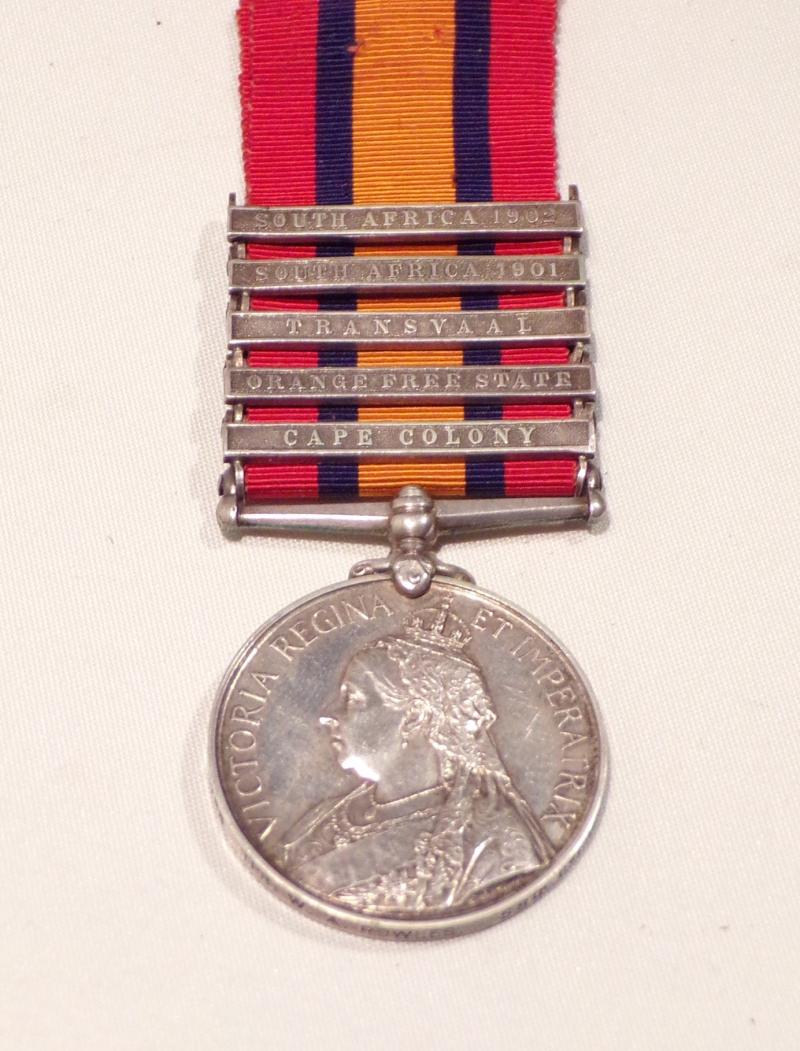
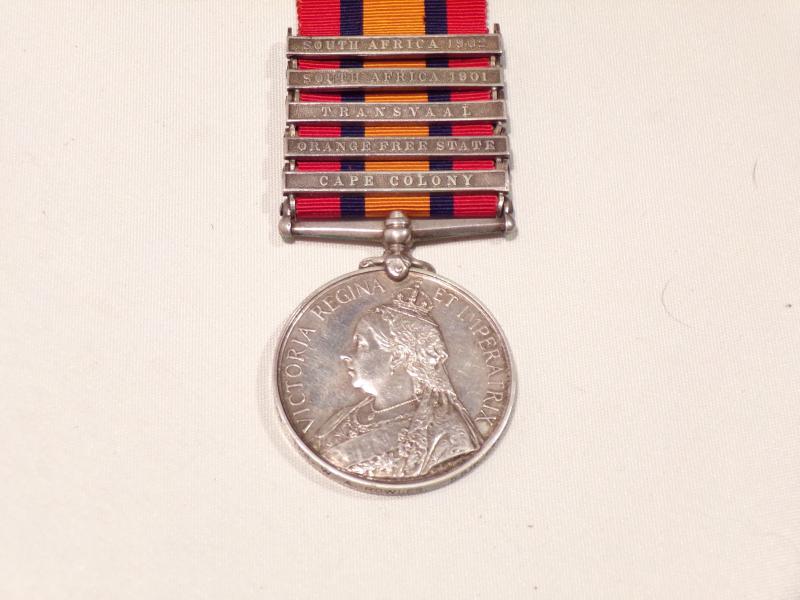
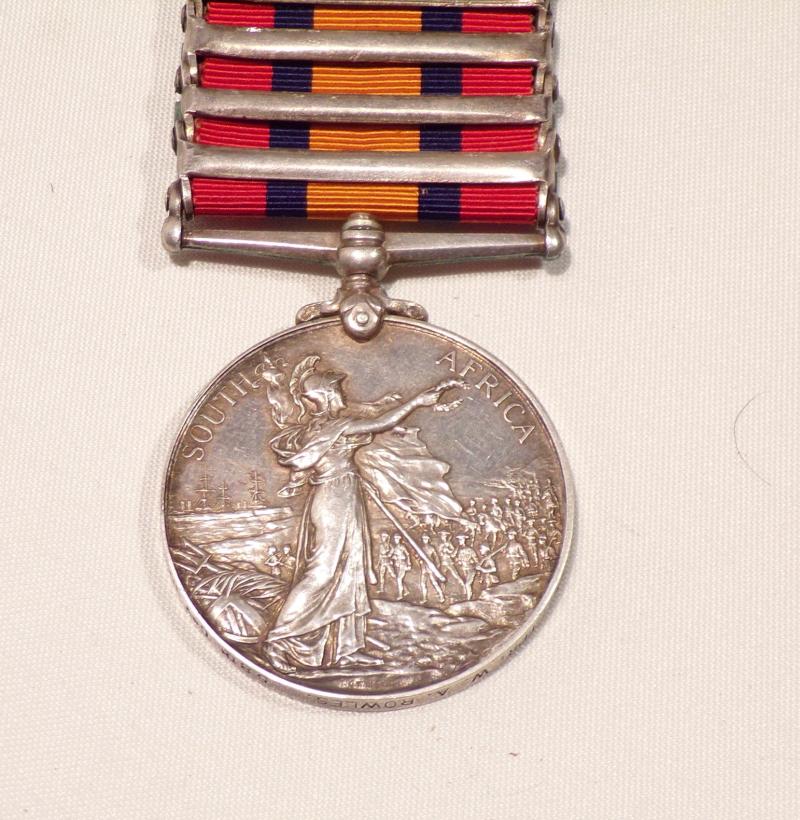
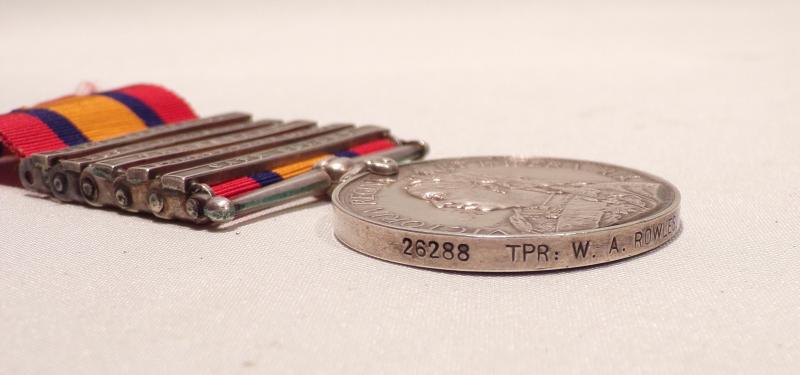
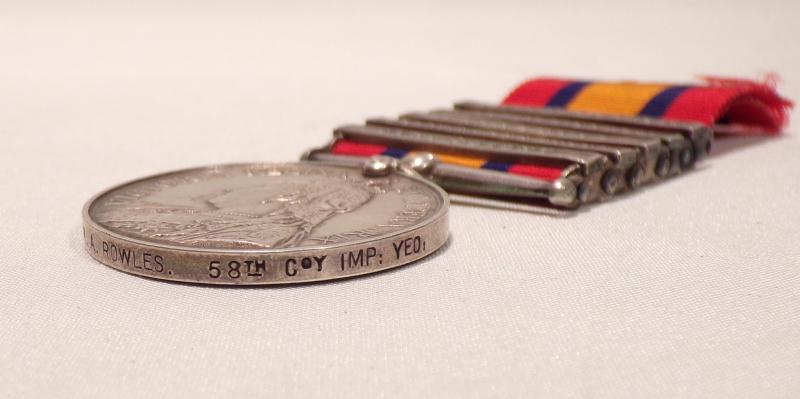
QSA + 5 to Tpr Rowels 58th Imperial Yeomanry
Queens South Africa medal correctly named to 26288 Trooper Adolphus William Rowles of the 58th (Berkshire) Company 15th battalion Imperial Yeomanry with clasps Cape Colony, Orange Free State, Tranvaal, South Africa 1901 and South Africa 1902. All clasps correctly attached to suspender.
Adolphus William Rowles was born on 22nd June 1880 in Henley Oxfordshire. Adolphus served with the Oxford Volunteer Rifle Corps from 1899 to January 1901 when he was transferred to the 58th (Berkshire) Company of the 15th Battalion Imperial Yeomanry, arriving in South Africa in the march of 1901 with B (Reading) Squadron around the 4th of April with the Second contingent Imperial Yeomanry.
The second contingent saw its first action at Vlakfontein on 29 May 1901, when four companies of Imperial Yeomanry were, along with a company of regular infantry and two guns of the Royal Artillery, part of a rear guard commanded by Brigadier-General H. G. Dixon. An attack by 1,500 Boers caused a significant portion of the yeomanry to break and fall back on the infantry, causing confusion and casualties, before a counter-attack by the infantry and one company of yeomanry forced the Boers to retire. Parts of the Yeomanry and infantry suffering heavy casualties.
The yeomanry's inexperience in defence and convoy protection was repeatedly exposed in Boer attacks. At Rustenburg on 30th September, and in the Battle of Groenkop on 25th December. In the Battle of Tweebosch on 7th of March 1902, a British column of 1,300 men, 300 of them Imperial Yeomanry, led by Lieutenant-General Paul Methuen, suffered 189 killed or wounded and 600 taken prisoner, Methuen among them.
The yeomanry took the brunt of the fighting; more than 50 per cent of its casualties were a result of enemy action, compared to 24 per cent for the militia and 21 per cent for the Volunteer Force. The Imperial Yeomanry suffered 3,771 casualties in the war, compared to the regular cavalry's 3,623.
Adolphus survived the war and was discharged at Aldershot on 9th August 1902. He returned home a gained apposition as Groom at Dove House Farm. Dovercourt Essex. On the 22nd of April 1904 he collapsed at work and died, the death certificate issued stated his death was caused by Epilepsy and Vertigo, Paralysis of the brain. In today’s terms it this in would have been classed as an aneurysm. He was only 24 years old.
The medal and clasps are in wonderful condition and looks never mounted, worn or polished.
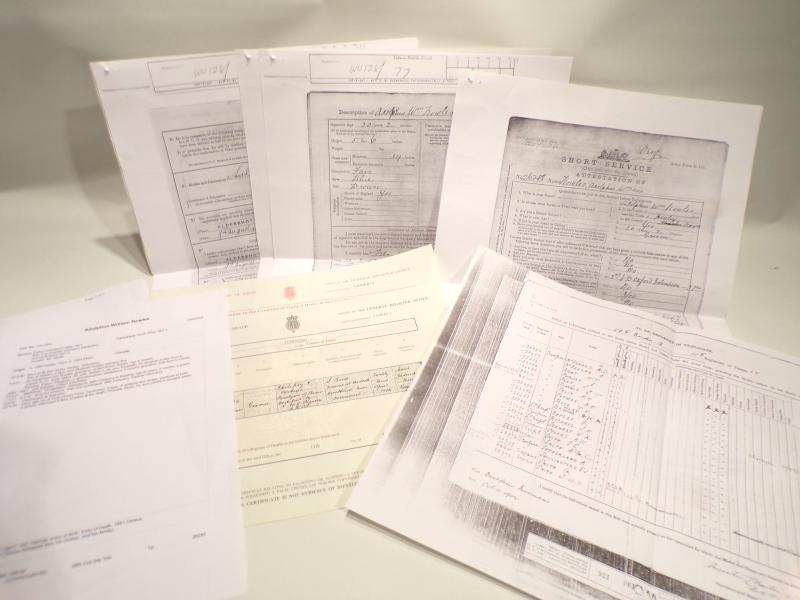
It comes with various research including service records, medal rolls confirming medal and clasps, census and other documents.
Code: 31282