
Father & Son Medal Groups Captain RE/RFA & Para Regiment
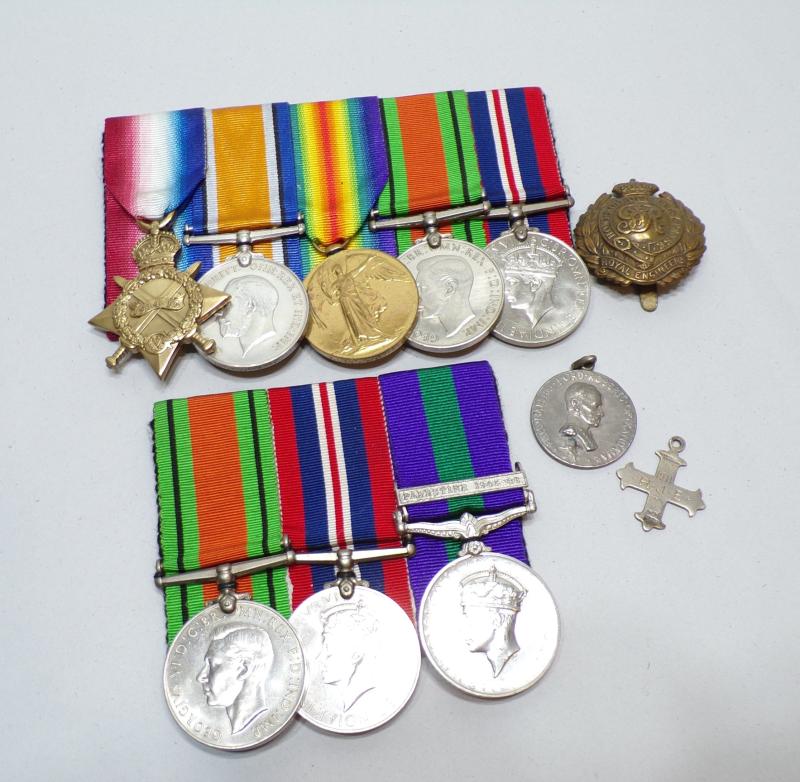
A very interesting pair of court mounted medal groups to father and son covering both world wars and beyond.
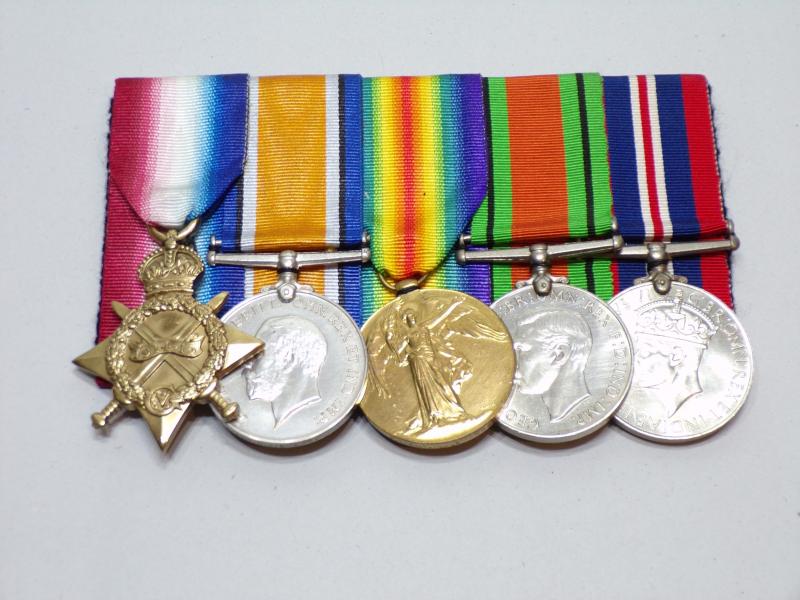
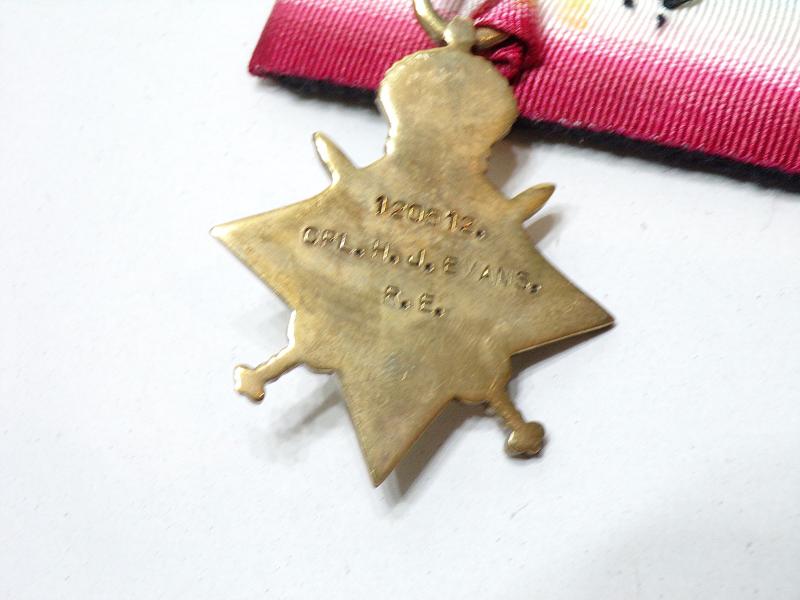
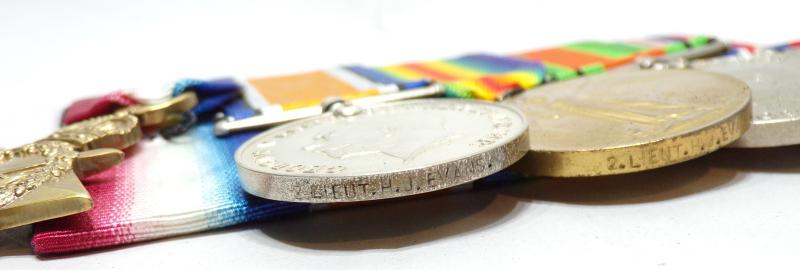
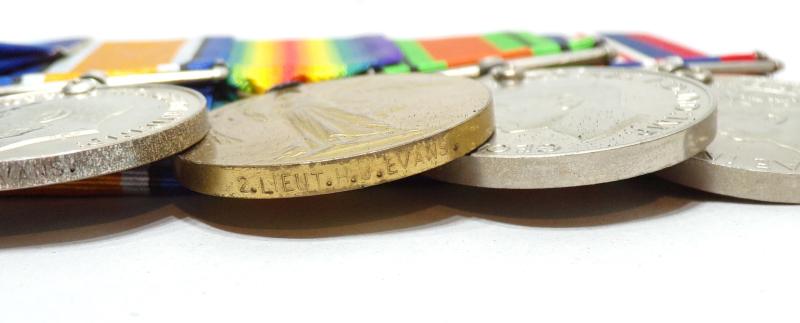
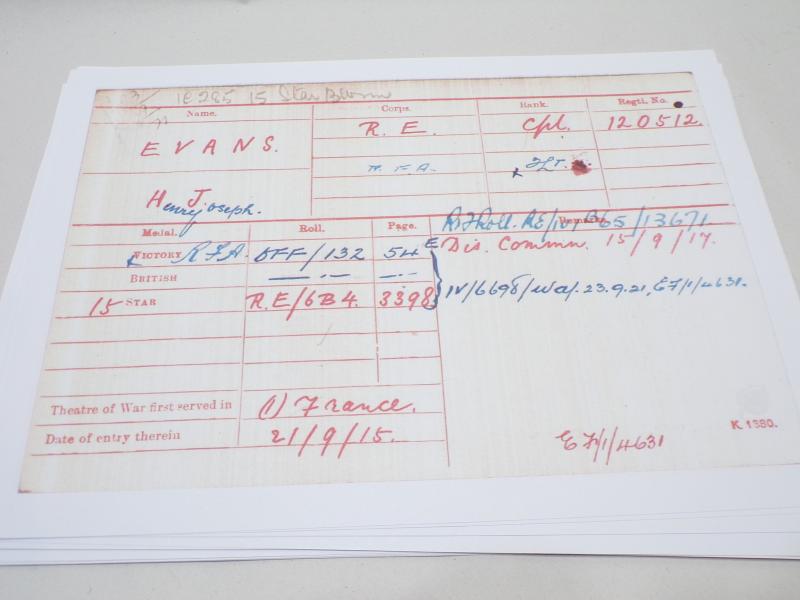
They comprise of a group of five, 1914/15 star to 120512 Corporal H. J. Evens Royal Engineers. British war and victory medal to 2nd Lieutenant H. J. Evans. WW2 defence and war medal, unnamed as issued.
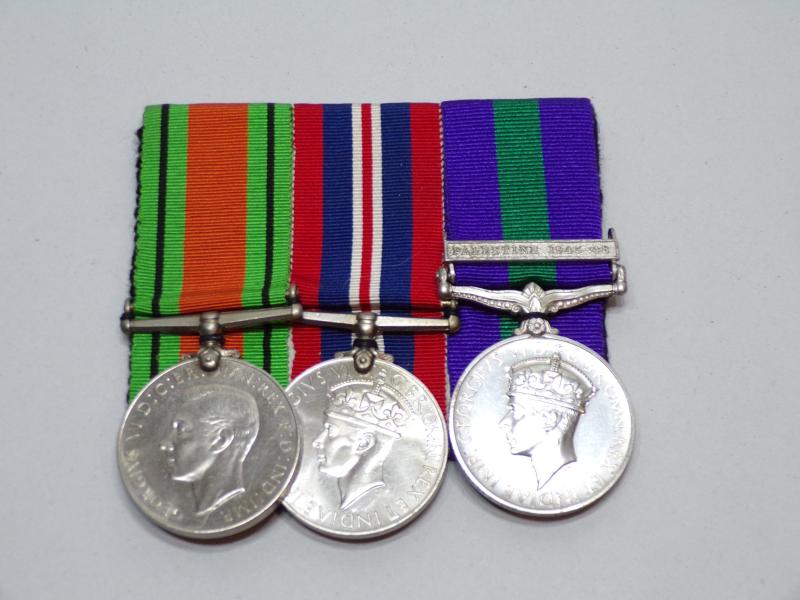
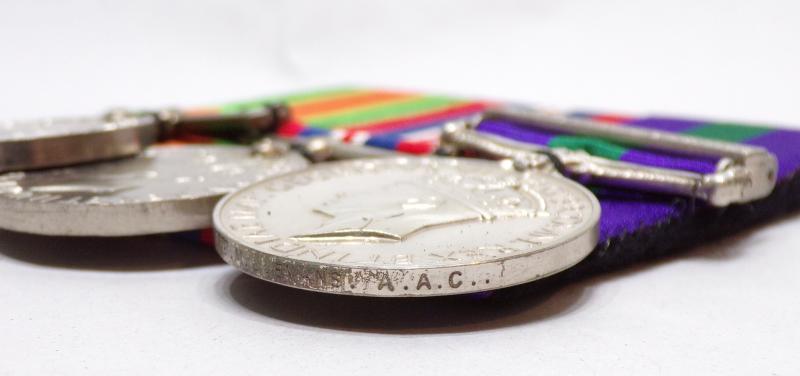
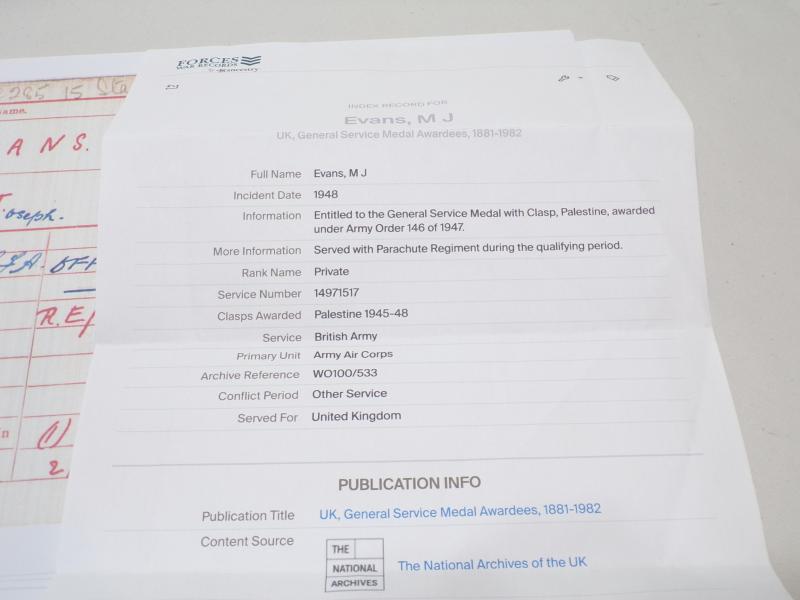
A group of three WW2 defence and war medal and George VI General service medal with Palestine 1945 – 48 clasp 14971517 Private M. J. Evans Army Air Corps.
Henry Joseph Evens was born in Sheffield on 16th July 1896. His father John owned his own business as a tool maker in Ecclesall, Sheffield, so he was able to send his children to have a good education, Henry J was educated at St Cuthberts College, Worksop as a border. He was 18 years old when war broke out in 1914 and he enlisted into the 12th York & Lancashire regiment on 10th April 1915. Probably due to his education he was instantly transferred to the Royal Engineers Special Company, in his case The Chemist corps and landed in France on 24th September 1918. This was a specialist unit in the RE that specialized chemical warfare. Men in this corps with special education or abilities entered their unit at the rank of corporal, the lowest rank that could talk directly to an officer. Although it is unknown what Henry’s job was exactly, he was part of the corps responsible for releasing poison gas. Poison gas was initially released from cylinders, but this required ideal weather conditions and could be very risky. In the first British gas attack, at Loos in September 1915, much of the gas was blown back into the faces of the British troops. From 1916, gas was employed in shells instead, which allowed attacks from a much greater range.
Henry was admitted to hospital a couple of times, just for a few days each, once in December 1915 and again in March 1916, he was only admitted for a few days each time, no cause is shown.
In 1917 he was awarded a battlefield commission which appeared in the London Gazette on 2nd October 1917 and promoted to 2nd Lieutenant and posted to the Royal Field Artillery. He was wounded in action on 6th November 1918 and he was awarded a wound stripe. He is still serving in 1921now promoted to Captain and serving with the 281st battery RFA at the Reduces camp in Sheffield. His service as an officer during the latter part of the war still needs research.
In the 1939 register he is married to Constance with one child, Michael and living in Darlington. Henry is employed as the District Inspector of the Automobile Association, being a member of the Army Officers Emergency Commission. He served at home during WW2 possibly with the home guard, again this needs more digging in to. He was awarded the Defence and War medal for his contribution.
His Son Michael Joseph Evans was born on 4th April 1927, so when the second world war was declared he was to young to serve, in fact he was still at school. He wasn’t 18 until 1944 and he joined as soon as he could into the Army Air Corps, later to become the parachute regiment. During 1945 he was probably still in training serving with 8th Para. In October 1945, the British Army's 8th (Midlands) Parachute Battalion—part of the 3rd Parachute Brigade within the 6th Airborne Division—was deployed to the British Mandate of Palestine.
Originally earmarked to fight in the Far East, the division was rerouted to the Middle East as the Imperial Strategic Reserve following the surrender of Japan. Initially stationed in the Lydda District, the 8th Battalion was quickly pulled into intensive internal security operations as Zionist insurgent groups (such as the Irgun and Lehi/Stern Gang) targeted British administration over immigration restrictions.
he battalion's most notable action in late 1945 occurred on November 13th, 1945, following the publication of a British government White Paper that rejected the immediate establishment of a Jewish state and maintained strict quotas on Jewish immigration. In response to a declared 12-hour general strike and subsequent widespread rioting, the Palestine Police became overwhelmed. The 8th Parachute Battalion was ordered directly into Tel Aviv to restore order.
The 8th Battalion continued these high-risk urban policing duties which earned the division's red-beret soldiers the local nickname "Kalaniyot" (Hebrew for poppy) until late 1947. In October 1947, the 3rd Parachute Brigade was disbanded. In January 1948, the 8th and 9th Parachute Battalions were amalgamated into the 8th/9th Parachute Battalion, which was eventually disbanded in June 1948 as the British fully withdrew from Palestine. After Michael was discharged from the Army it is believed he went to live and work in Hartlepool.
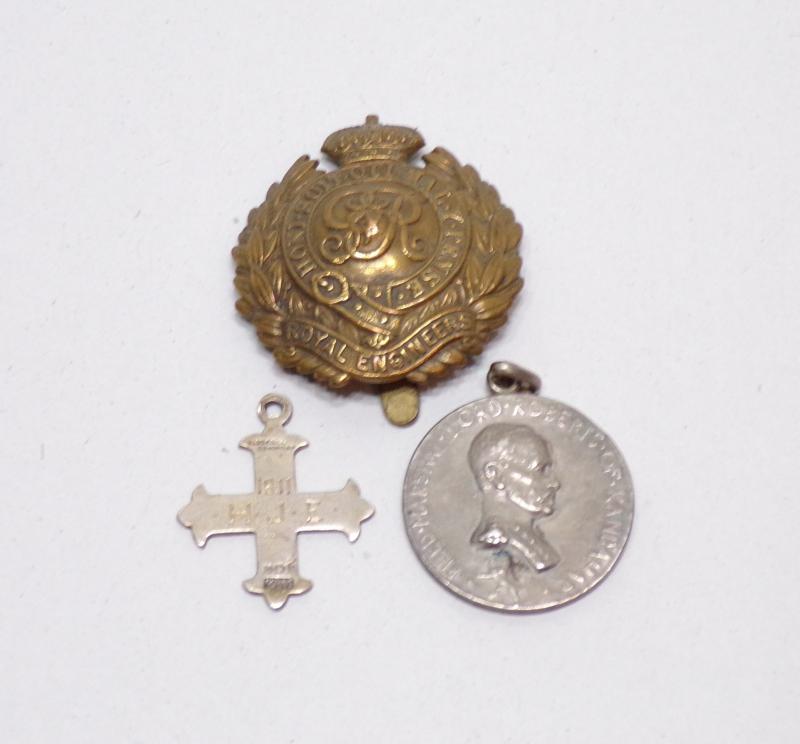
Both sets of medals are in excellent condition and have been court mounted and come with various original badges, sports medals and research including service records and census information.
Code: 31922
450.00 GBP